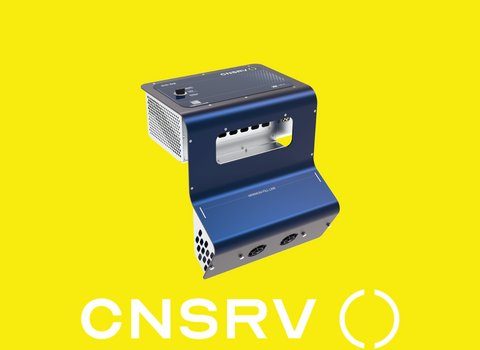
Cold Water vs Walk-In vs CNSRV: Which Thawing Method Is Actually Best?
Full-submersion thawing with continuous water movement is the fastest, safest, and most consistent of the three methods commercial kitchens use. Walk-ins take 12–48 hours, static cold water stratifies without stirring, and running faucets use hundreds of gallons while often exceeding 70°F. CNSRV thaws up to 50% faster and uses 98% less water.
Each method has very different implications for food safety, labor, water usage, and operational consistency. This article breaks down the science behind each and explains why full-submersion systems with continuous movement consistently outperform legacy approaches.
Key takeaways
- Walk-in thawing takes 12–48 hours and often thaws the exterior before the center.
- Static cold water is faster but stratifies into warm and cold zones unless stirred or replaced.
- Running faucets use hundreds of gallons, contact one surface, and frequently break the 70°F and 2-hour limits.
- Water conducts heat 25 times faster than air, so full submersion beats air thawing.
- CNSRV thaws up to 50% faster with 98% less water and no plumbing.
How well does walk-in refrigeration work for thawing?
Walk-ins use no water but are extremely slow and uneven. They are reliable for frozen-to-sellable transitions in grocery, but they fail for kitchens needing predictable timing.
Pros
- Low water use
- Good in theory for extended thawing
Cons
- Extremely slow (12–48 hours)
- Often uneven — exterior thaws before the center
- High risk of out-of-stock situations
- Occupies valuable refrigerator space
- Not practical for just-in-time operations
What are the limits of static cold-water thawing?
Static or manual immersion is safer and more efficient than a walk-in, but still has limitations. Operators must stir or replace water, which is rarely done consistently.
Pros
- Faster than refrigeration
- Better surface contact than running water
Cons
- Water stratifies (cold/hot zones form)
- No agitation, so thawing is uneven
- Requires constant monitoring
- Must maintain water below 70°F manually
- Still wastes water if repeatedly refilled
Why is running cold water (the faucet method) risky?
Running water is more guesswork than science: it wastes water, thaws one surface, and frequently violates the 70°F and 2-hour limits in the FDA Food Code (Section 3-501.13). See the full breakdown in why running-water thawing is risky.
Pros
- Faster than static water
- Easy to set up
Cons
- Uses hundreds of gallons
- Water often exceeds 70°F
- Only thaws one surface area
- Cannot maintain even temperatures
- Frequently violates the 2-hour rule
How does CNSRV's continuous movement and full surface contact compare?
CNSRV combines engineered agitation, full immersion, and temperature regulation — the three factors that define the fastest and safest thawing method.
Scientific advantages
- Water conducts heat 25 times faster than air
- Full submersion ensures 100% surface contact
- Continuous circulation eliminates warm pockets
- Regulated temperatures prevent code violations
Operational advantages
- Thaws food up to 50% faster
- Uses 98% less water
- Delivers standardized results across locations
- Requires no plumbing
- Adds chilling capability (dual use)
For more on the science of movement and immersion, see Why Continuous Water Movement Matters in Food Thawing.
How do the four thawing methods compare?
CNSRV rates fastest, safest, and lowest in water use; the walk-in is slowest and the running faucet uses the most water.
| Method | Speed | Safety | Uniformity | Water Use | Operational Fit |
|---|---|---|---|---|---|
| Walk-In | Very Slow | High | Low | None | Poor |
| Static Cold Water | Slow | Medium | Medium | Medium | Medium |
| Running Faucet | Medium | Low | Very Low | Very High | Medium |
| CNSRV | Fastest | Highest | Highest | Lowest | Best |
Which thawing method is best for your operation?
A controlled continuous-movement system fits restaurants, hotels, and grocery departments alike.
For restaurants
CNSRV — predictable prep plus major labor savings
For hotels
CNSRV — avoids water-cost spikes and improves banquet flow
For grocery, seafood, and meat departments
CNSRV — protects product quality and eliminates water waste
What is the bottom line?
Walk-ins are slow, static water is inconsistent, and running water is risky and wasteful. CNSRV's controlled, continuous-movement system delivers the fastest, safest, most sustainable thawing method available in commercial foodservice. Explore the CNSRV DC:02.
Frequently asked questions
What is the fastest way to thaw food in a commercial kitchen?
Full submersion in regulated, circulating water. Water conducts heat 25 times faster than air, and CNSRV thaws up to 50% faster than legacy methods.
How long does walk-in thawing take?
Typically 12–48 hours, and the exterior often thaws before the center.
Is running-water thawing compliant with the FDA Food Code?
Often not. Tap water frequently exceeds 70°F and the process frequently violates the 2-hour rule, while using hundreds of gallons.
Why is static cold-water thawing uneven?
Without agitation the water stratifies into warm and cold zones, and operators rarely stir or replace it consistently.
How much water does CNSRV save versus a running faucet?
CNSRV uses 98% less water and requires no plumbing.