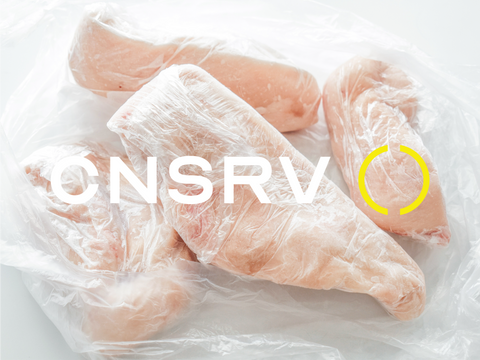
The Safest Way to Thaw Chicken: A Food-Safety Expert Guide
Thawing chicken seems simple, but it’s one of the highest-risk steps in any kitchen. Raw poultry carries naturally occurring bacteria — including Salmonella and Campylobacter — that multiply rapidly when temperatures rise above 41°F. The key to safety is speed + control: thaw quickly, but never allow warm zones or extended time in the danger zone.
Why Thawing Matters More Than Operators Realize
Improper thawing causes:
-
Uneven internal temperatures
-
Warm exterior layers while the center stays frozen
-
Food safety violations
-
Labor inefficiency
-
Product quality loss
Most kitchens rely on running-water thawing or refrigerators, both of which come with significant drawbacks.
Refrigerator Thawing
-
Safest in theory, but too slow in practice
-
24–48 hours for most proteins
-
Leads to stock-outs and inconsistent readiness
Running-Water Thawing
-
Faster but extremely wasteful
-
Only splashes one point of the surface
-
Municipal water often exceeds the ≤70°F code limit
-
Hard to monitor timing and temperature
Why Continuous Water Movement + Full Submersion Is Superior
The science is simple:
Water transfers heat 25× faster than air — but only when it’s in full contact with the surface.
Running faucets only splash a small area, while the rest of the product sits partially exposed to warm kitchen air. This creates:
-
Temperature irregularities
-
Warm pockets
-
Risk of bacterial growth
-
Slower thawing
In contrast, a controlled system that keeps food fully submerged and maintains continuous water movement ensures:
-
Even, predictable thawing
-
No warm spots
-
Faster heat transfer
-
Full alignment with food code requirements for “sufficient velocity to agitate”
This combination is the gold standard for safety and consistency.
Modern Best Practice
CNSRV delivers:
-
Regulated temperatures below 70°F
-
Full-surface contact
-
Automated agitation
-
Thaws up to 50% faster
-
98% less water usage
Bottom Line
The safest thawing is fast, controlled, and uniform.
Full-immersion with continuous water movement and temperature control is the modern best practice — far superior to faucets or walk-ins.
For chicken thaw times by portion size — and how they compare to salmon and other proteins — see the defrost time guide and our salmon thawing guide. Or see the CNSRV DC:02 in action.